Tourist Tips ~ Florida's Forgotten Coast
Tourist Tips
Everything You Need To Know About The Area, But Didn't Know To AskBy Marie Logan, Star Staff Writer
General InformationFrom St. Joe Beach, driving eastward about four miles on U.S 98 you reach the town of Port St. Joe. One-half mile on the other side of Port St. Joe, U.S. 98 splits to the right as C.R. 30-A. You can continue on U.S. 98 for about 30 or 40 minutes to Apalachicola, or you can take C.R. 30-A to Indian Pass, Cape San Blas, and St. Joe Peninsula. The area is changing daily, becoming more and more developed with houses, gated communities, and commercial enterprises. For right now, you can still see the pristine, raw Cape and peninusla that are so breathtaking. This foray into the past is particularly evident at Salinas Park, along St. Joseph Peninsula and in the state park, and along Indain Pass Road. If you choose C.R. 30-A, it's a spectacular drive along a winding, two-land road, twining among tiny communities, amazing scenery, palms, pines, magnolias, live oaks, unexpected pleasures and jarring gaps in the landscape. After a six and one-half mile run along the coastal marshes of St. Joe Bay, C.R 30-A splits 90 degrees to the right (at Dead Man's Curve), and the road to the right becomes C.R. 30-E (also known as Cape San Blas Road), the only road that leads onto the Cape and the peninsula. Continue about three miles along C.R. 30-A and you reach Indian Pass. You can go straight, coming out about 10 miles later back on U.S. 98 in Franklin County just a few miles west of Apalachicola. This route is known as the "scenic route." Or you can turn right at the Indian Pass Raw Bar, which reopened July 14 after being closed the past year, due to damage from Hurricane Dennis. If you turn right at the Raw Bar, you will get a rapidly disappearing glimpse of the true Old Florida. This road takes you down a densely vegetated, three and one-half mile long peninsula that deandends at "the pass," where the western end of Apalachicola Bay empties into the Gulf, between the tip of Indian Pass and St. Vincent Island. At the pass you'll find a waterfront campground, supply store, and public boat ramp. Take the split back at C.R. 30-E/Cape San Blas Road and you wind your way through Cape San Blas onto St. Joseph Peninsula. There is only one road, so you can't get lost. Just follow C.R. 30-E past the Stump Hole and the "Great Wall" all the way to the end of C.R. 30-E, to the entrance of St. Joseph Peninsula State Park, where you either enter the park or turn around. By the way, this entire area of Cape San Blas and the peninsula is called simply "The Cape." The areas of Indian Pass, the Cape and the peninsula are a little less developed, a little more natural, considerably more restricted, than Mexico Beach, Beacon Hill and St. Joe Beach. Along C.R. 30-A you pass: Jones Homestead and the Port St. Joe regional airport (or at least the road leading to them) Country Club Road, leading to St. Joseph's Bay Country Club, the area's only golf course open to the public Simmons Bayou and Presnell's Marina and Campground St. Joseph Bay State Buffer and Aquatic Preserve Indian Pass, Indian Pass Raw Bar, and Indian Pass Road, leading to Indian Pass Campground and the St. Vincent Island Shuttle Scenic overlook, near the east end of C.R. 30-A
Along C.R. 30-E/Cape San Blas Road you pass: Salinas Park, a great public beach park, also where horseback riding treks originate Cape San Blas lighthouse cutoff Cape Palms Park Rish State Park Can San Blas Catholic Mission Church, open limited hours St. Joseph Peninsula State Park
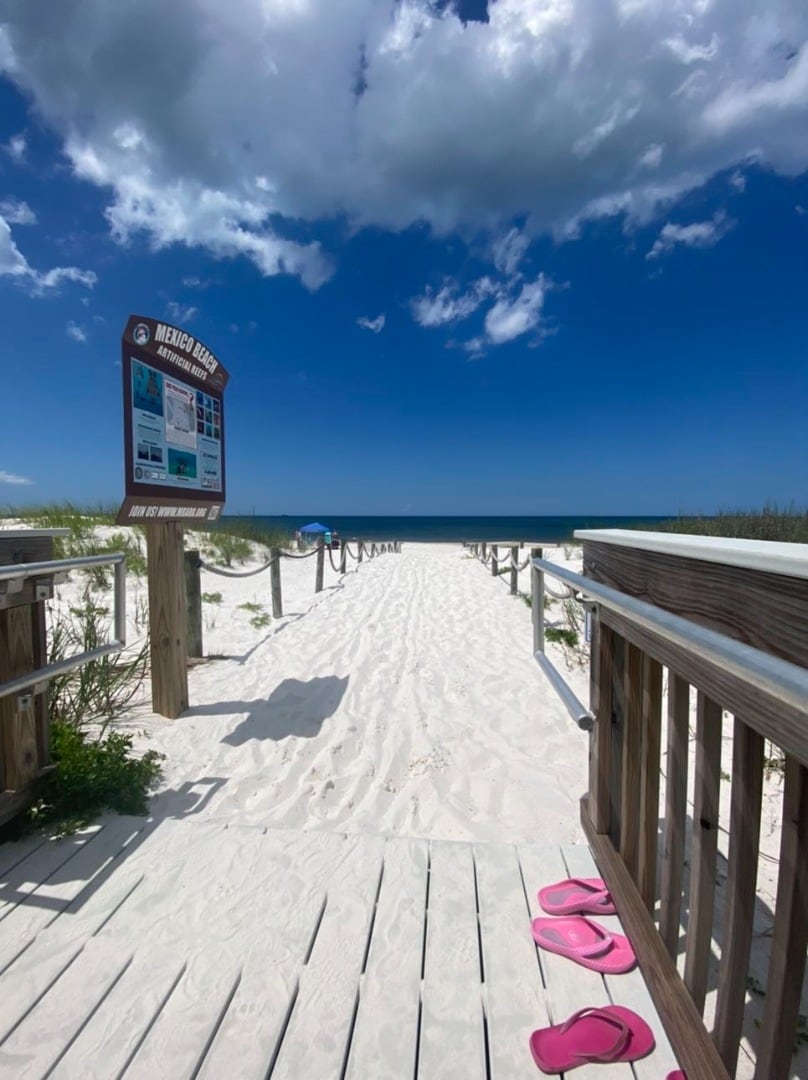
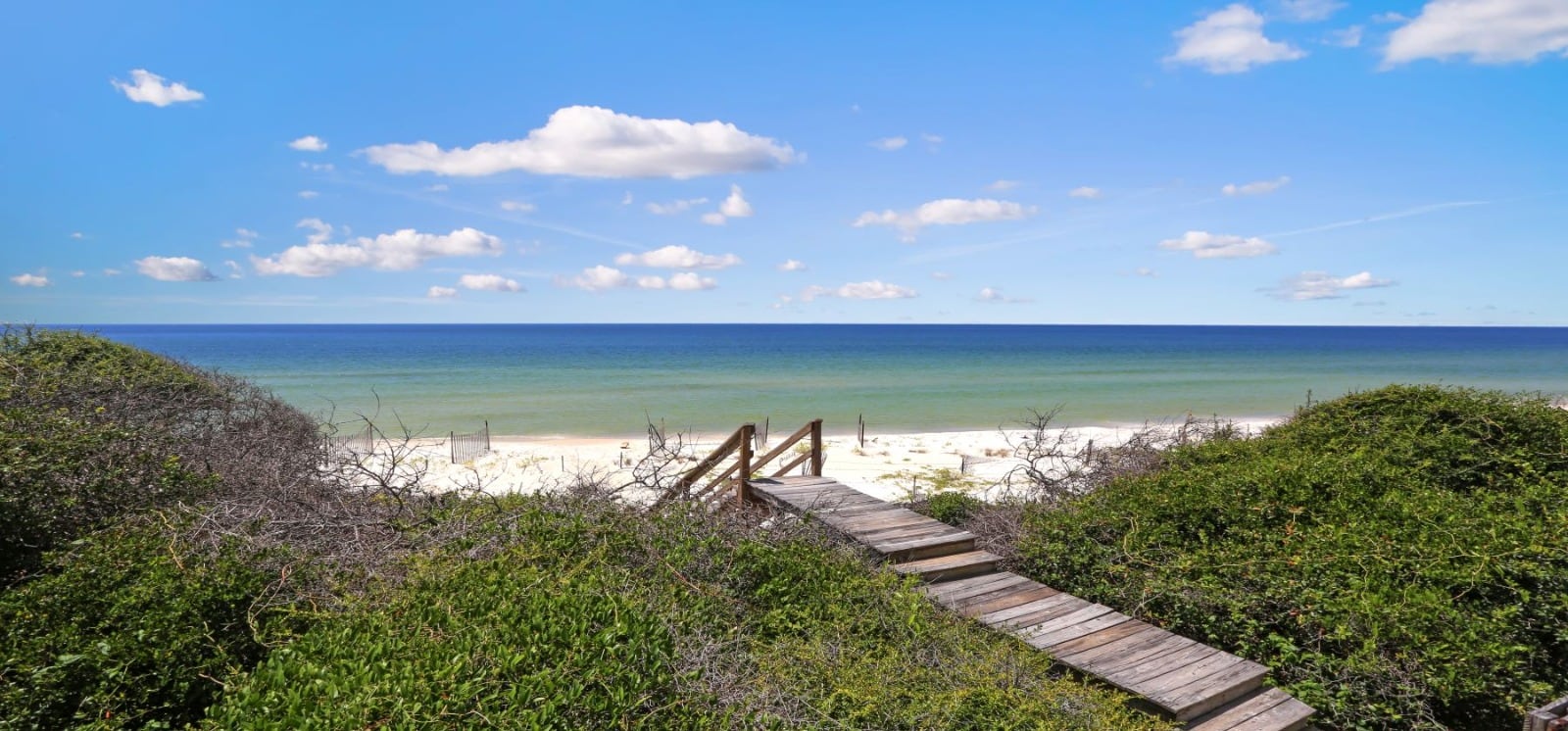
Law Enforcement, Fire and Medical CareThe area is serviced by the Gulf County Sheriff's Department, the South Gulf Volunteer Fire Department, and the Gulf County Emergency Medical Services. Again, like at The Beaches, in the way of most small rural areas, all the communities from Mexico Beach, Overstreet, St. Joe Beach, Port St. Joe, White City, even Wewahitchka and Dalkeith help each other during emergencies. The South Gulf Volunteer Fire Department is also a water rescue unit, and their service abilities and physical plant facilities are currently being expanded. Speed Limits, Highway SafetyThe speed limits along C.R. 30-A and 30-E change every few miles. Top speed in some places is 55 miles per hour, but slows down frequently to 35 miles per hour, especially around the tiny communities. Please pay attention. Slowing down in the marked areas is especially important while so many visitors are using this very narrow road, and with the added construction traffic and equipment. The majority of both roads are marked no-passing zones. That included the state-wide restriction of passing on the right, along the shoulder of the road, as well. For those not familiar with the law, it is illegal to pass anyone on the right if there is not a regulation second traffic lane to the right. It is illegal to pass on the right by crossing the solid white line, which marks the shoulder of the road, particularly while waiting for the vehicle stopped in front of you to turn left. Long and Winding RoadIn addition to watching the speed limits carefully along C.R. 30-A and 30-E, you need to be aware of the very narrow and winding road, and the absolute lack of shoulders along the road. If you swerve off the road, you will most likely land in marsh, swamp or bay. Critter CrossingWhile you are driving along this beautiful route, watch out for wildlife crossing the road, especially at night and in the very early morning, about sunrise. You might see alligator, snakes, deer, raccoons, black bear, vultures, eagles, red fox, wild boar, even an armadillo or two. (Armadillo have managed to make their way from south Texas into the state park on the peninsula.) You probably will not see anything, but you need to be aware that the possibiltiy does exist. This is also true along U.S. 98 from Port St. Joe to Apalachicola, and from Mexico Beach through Tyndall Air Force Base. Public Beach Access, Gulf SideBe very careful to use public beach accesses (many of which are not clearly marked) and do not use private beach walkovers connected to individual houses. Public beach access to the Gulf beaches are located at: Salinas Park on C.R. 30-E about one-half mile from C.R. 30-A Cape Palms Park, about five miles down Cape San Blas Road, steps only to beach Dunes Drive, to the water side of Cape San Blas Road, about three or four miles from the Stump Hole Vehicle beach access point at Bay Street/Indian Pass, just east of Dead Man's Curve Vehicle beach access point just west of Donna Spears Realty on C.R. 30-A/Indian Pass Vehicle access point to the west of the boat ramp at Indian Pass Vehicle access point at the Stump Hole
Note: For those of you familiar with the area, the vehicle beach access point at the Stump Hole/Great Wall (at the curve of C.R. 30-E going onto the peninsula) has been closed to vehicle traffic due to major beach erosion. Public Beach Access, Bay SideThere is only one public beach access poing to the bay from Cape San Blas Road. At the curve of the road going onto the peninsula, across from the Stump Hole and rock wall, on the bay side is an open, marshy area with limited parking. A fairly clear path leads to the bay. This is part of the St. Joseph Bay State Buffer and Aquatic Preserve, and is open to canoe and kayak launching. Please stay on the marked pathway. All other beach access on the bay side is on private property and is not open to the public. Beach Public RestroomsThere are fewer public restrooms in this area than at The Beaches. At Indian Pass, there is really no public restroom. There is usually a port-a-potty located at the boat ramp, and the campground store has a restroom. On the Cape, public restrooms are located at: the entrance to Salinas Park Cape Palms Park, midway down the peninsula various locations within St. Joseph State Park, at the end of Cape San Blas Road
Handicap FacilitiesThe public facilities in the area are all handicap accessible to some extent. Wheelchair ramps to the Gulf side beaches are available at Salinas Park and in various locations within the State Park. Cape Palms Park is wheelchair accessible along the first half of the boardwalk and into the pavillion, but not down to the beach at this time. Sections of the State Park are in various stages of accessibility. If anyone needs assistance to access the park, contact the park office as soon as possible before your visit. Sometimes it takes up to 10 working days to schedule a particular accomodation. Parks/PlaygroundsThere are two public parks on the Cape: Salinas Park and Cape Palms Park. Salinas Park is about one-half mile past the split of C.R. 30-A and 30-E on the left. It is a large, beautiful beachfront park with picnic areas and public restrooms (neither on the beach), and handicap accessible boardwalks that give access to a spectacular beach. This is also where most of the horseback rides on the beach originate. Cape Palms Park is about five miles down Cape San Blas Road, well past the Stump Hole and Great Wall, on the gulf side of the road. A new park, it gives public access to the Gulf beach, and offers covered pavilions, public restrooms, showers, a couple of outdoor grills, a playground, and a covered deck. Needless to say, it is very popular - and crowded - spot in the summer. The entrance to the park is not very clearly marked, and it is easy to drive right by, so look carefully. Bike PathThanks to the efforts of many people, there is now a bicycle path on the bayside of C.R. 30-E, from just north of Cape Palms Park to the state park entrance. This is the first of three phases for an extended bike path along the peninsula. Please remember, this is a path for pedestrians and bicycles only, no golf carts are allowed. Restricted AreasYou will notice a great deal of the Cape and peninsula is behind chain link and barbed wire fencing. This is posted military property - part of Tyndall Air Force Base and Eglin Air Force Base's active territory. Do not trespass. They do not have a sense of humor about trespassers. Also, you will notice on the peninsula a fenced area with lots of cottages and extensive boardwalks. This is the state-owned, 100-acre Rish Park and is not open to the public. It is a special park for handicapped Florida residents and their families. There are also several gated communities in the area, and you will be stopped at the entrances by the security guards. Historic Sites/State ParkThere are a couple of historic sites on the Cape: the marker for the Confederate Saltworks (located at Old Saltworks Cabins) and the Cape San Blas lighthouse, on Air Force property. The saltworks no longer exist; there is only a historical marker on the grounds Old Saltworks Cabins. But, the area itself is spectacular and worth the trip. Look for the unobstructive sign on the bayside of C.R. 30-E, about two or three miles from the turnoff. The Cape San Blas lighthouse is located on Air Force property about a mile before Stump Hole. The road to the lighthouse is located in series of S-curves across from an enclosed radar compound, which is hard to miss. Turn south (toward the water) and go through a large gate and follow the road to the lighthouse. Pay attention to the signs and do not wander onto restricted property. St. Joseph Peninsula State Park, located at the north end of the peninsula, is a 2,500 acre wildlife refuge and wilderness park, with about 10 miles of uninhabited beach and bay shores, boat ramp, basin, RV camp and tent sites, and cabins. The last seven miles of the park (from the end of the paved road and the cabins to the northern point) are a 1,750-acre wilderness preserve. Activities include canoeing and sea kayaking, biking, walking (along designated trails only), fishing, and wilderness hiking and camping. For more information about the park and to make reservations, contact St. Joseph Peninsula State Park, 8899 Cape San Blas Road, Port St. Joe, FL 32456, or call 850-227-1327. Dogs on the BeachIn this area dogs are allowed on the beaches, but must be leashed at all times, and you must pick up after your dog. The easiest thing to do is to carry several plastic bags (from grocery or variety stores) with you when you walk your dog. There are now trash receptacles at each of the public beach access points. Place one corner of the bag over your hand (the remainder of the bag is covering your arm), pick up the wastewith your covered hand and, while holding the waste in your hand, pull the rest of the bag over your hand, enveloping the waste inside the bag. Then simply tie off the bag, trapping the waste in that corner of the bag, and you can use the bag for one more cleanup. When you get back from your walk, toss the bag in the trash. The state park has its own rules about pets. Pets are not allowed in camping areas, on bathing beaches, in wilderness areas, and may be restricted in other designated areas of the park. Where pets are allowed inside the state park, they must be kept on a six-foot, hand-held leash and well-behaved at all times. Service animals for visitors with disabilities are welcome in all areas of the park. Beach EtiquetteThere is a certain "beach etiquette" pertainting to where people should and should not walk-on any beach. Sea oats, sea grasses and beach morning glories are the first line of defense against beach erosion, and as such are very important and protected. It is illegat to remove any sea oats from any section of any beach, or harm the sea oats in any way, including walking on them. It is also illegal in many places to walk across the dunes themselves. Please use only the legitimate dune walk overs and marked public beach access points, and the well-defined trails in the more remote areas. Please do not cut through anyone's private yard or garage to use a beach walkover connected to a private dwelling. This is trespassing. Find a public access to the beach. Please remember to clean up after yourself and your family. This includes taking with you any soiled baby diapers, beer cans, especially any glass containers, all food wrappings. This applies particularly to the plastic rings holding six-pack cans of beer, water and soft drinks. If you absolutely must take these six-pack rings onto the beach, cut the individual rings in half. Otherwise, seabirds, turtles and some fish get these plastic rings trapped around their beaks, heads and bodies, etc. and ultimately die a very horrible, slow death. One of the great delights of strolling along any beach is looking for shells and other "stuff". All the area beaches have an interesting assortment of shells that wash up, but you need to know which shells to tak, and which ones to leave behind. It is illegal to take any "live" shells from any Florida beach. "Live" shells are those in which a creature lives, whether the occupant is the original "owner" or not. So if any critter is visible, gently place the shell back in the sand. This applies to sand dollars and starfish, as well. If you pick up either a sand dollar or a starfish, turn it over and very, very gently run your finger across its alveolae, or tiny "tentacles". If these "tentacles" move at all on their own, the starfish or sand dollar is still alive, and you should gently place it back in the surf. Avoid jellyfish and Portuguese men of war when they have washed up on the beach. Many types of jellyfish, with or without tentacles, retain their ability to sting long after they have washed ashore. Do not let children handle them or dogs sniff and paw on them. If you are stung, get medical help. Also be careful not to handle any dead fish that was ashore, especially puffer fish and baby sharks. Both types of fish have either sharp quills or sharp scales that can cause nasty wounds, even if the fish are dead. It is actually illegal to remove any part of migratory water fowl from the beach, including pelican feathers lying in the sand. This is not strictly enforced along The Beaches, but be aware of removing sea gull and pelican quills from the beach when you are in any state park. The rangers my confiscate them and, while unusual, could also fine you. Beach Fires, Other Lights On The Beach at NightAs far as enjoying bonfires on the beach at night, fires are allowed on these beaches unless a burn ban is in effect. Check with the Sheriff's Department or the South Gulf Volunteer Fire Department before making plans for a beach bonfire. Please be particularly careful at this time when considering a fire on the beach because of extreme drought conditions in the entire Panhandle. It is best not to start fires at this time. Beach fires are not allowed, however, on the beaches inside the state park. The park has its own rules and regs that you need to follow very carefully. If you do have a beach bonfire, just use standard campfire safety. Make sure you are well down on the sand, near the waterline and not near the sea oats or vegetation. Keep the fire size manageable, be very aware of the wind, and be absolutely sure that the fire is completely extinguished when you leave. Do not burn wood that contains nails, and do not take wood, including pallets, from any construction site and drag them onto the beach to burn. First, it is illegal to steal from a construction site and second, nails from burned wood become covered with sand and people step on the nails. Please remove all cans, bottles, garbage, etc. when you leave. Again, trash containers are placed at every beach walkover for your convenience. While talking about removing trash from the beach, remember that it is turtle season from the beginning of May through October 31, and each piece of trash, plastic rings, fishing tackle, whatever is a huge problem for sea turtles coming ashore to nest. As for beach fires and other lighting on the beach at night, again, remember the turtle rules: do not build fires or use any lights of any kind, including flash lights ont the beach anywhere near a marked turtle nest. Turn out any outdoor lights that reflect in any way on the beach, and tightly cover all windows facing the beach. These lights will attract turtles and put them in danger. In fact, lights anywhere on the beaches are a danger to turtles and hatchlings. They will focus on your artificial light and move toward water, which they must do to survive. Turtle NestsPlease remember that you must not engage in any activity close to marked turtle nests. This includes setting up camp, placing and using chairs or picnic tables, allowing children to play or dogs to romp. Turtle nests are strictly off-limits. Marked turtle nests will be surrounded by four stakes and yellow "crime scene" tape, and covered with a piece of heavy wire screening that cannot be removed. Turtle nests are protected by federal law and anyone interfering with the nest, the adults or the hatchlings will be prosecuted. Beach DrivingSince the beach restoration took place in 2008 beach driving has opened back up from Indian Pass to the State Park. To drive on the beach in Gulf County, you must purchase a beach driving permit from the Gulf County Tax Collector's Office in the county courthouse on Cecil Costin Boulevard. Currently, costs are $15 per year for Gulf County residents or Gulf County property owners; $150 per year for non-residents or non-property owners. At the time of permit purchase, you are given a detailed map of access points and driving areas. Anyone driving on the beach needs to be aware of turtle nests and stay far away from them. Driving at night, especially during turtle season is strictly prohibited. If driving on the beach, watch closely for children, and maintain a slow, rolling pace - no speeding, no destructive driving that tears up the beach. North of Stump Hole is quite congested with visitors, please take special precaution when driving in this area. Beach Flag Warning System, Lifeguards, Rip TidesThere are no lifeguards anywhere along the beaches of Indian Pass, the peninsula, or Cape San Blas. Signs stating this are posted at most municipal beach walkovers and swimmers enter the water at their own risk. This entire area does get dangerous rip currents on occasion, and sharks are common along both sides of the peninsula, both in Gulf and bay waters. Everyone should watch the weather reports or the "boat and beach" forcasts on television each morning to see what the water conditions are for the day. There is a system of colored flags placed on the Panama City beaches early each morning to alert people of wind and water conditions. These flags and conditions are discussed on both Channel 7 (WJHG-TV/NBC) and Channel 13 (WMBB/ABC) morning news programs, as well as on local access channels 4 (Mexico Beach) and 12 (Port St. Joe/Cape San Blas/Indian Pass). It is in your best interest and safety to watch for this information. Even though the forecasts are for the Panama City area beaches, the same or similar wind and water conditions are probably going to be present at The Beaches and Cape San Blas. The new-statewide beach flag warning system is: Green flag: Low hazard, conditions are favorable for swimming, swim at your own risk Yellow flag: Medium hazard, swim with caution Red flag: High hazard, swimming not recommended Double red flag: Danger, water closed to public Purple flag: Caution, marine pests present. Marine "pests" can be anything from jellyfish to sharks.
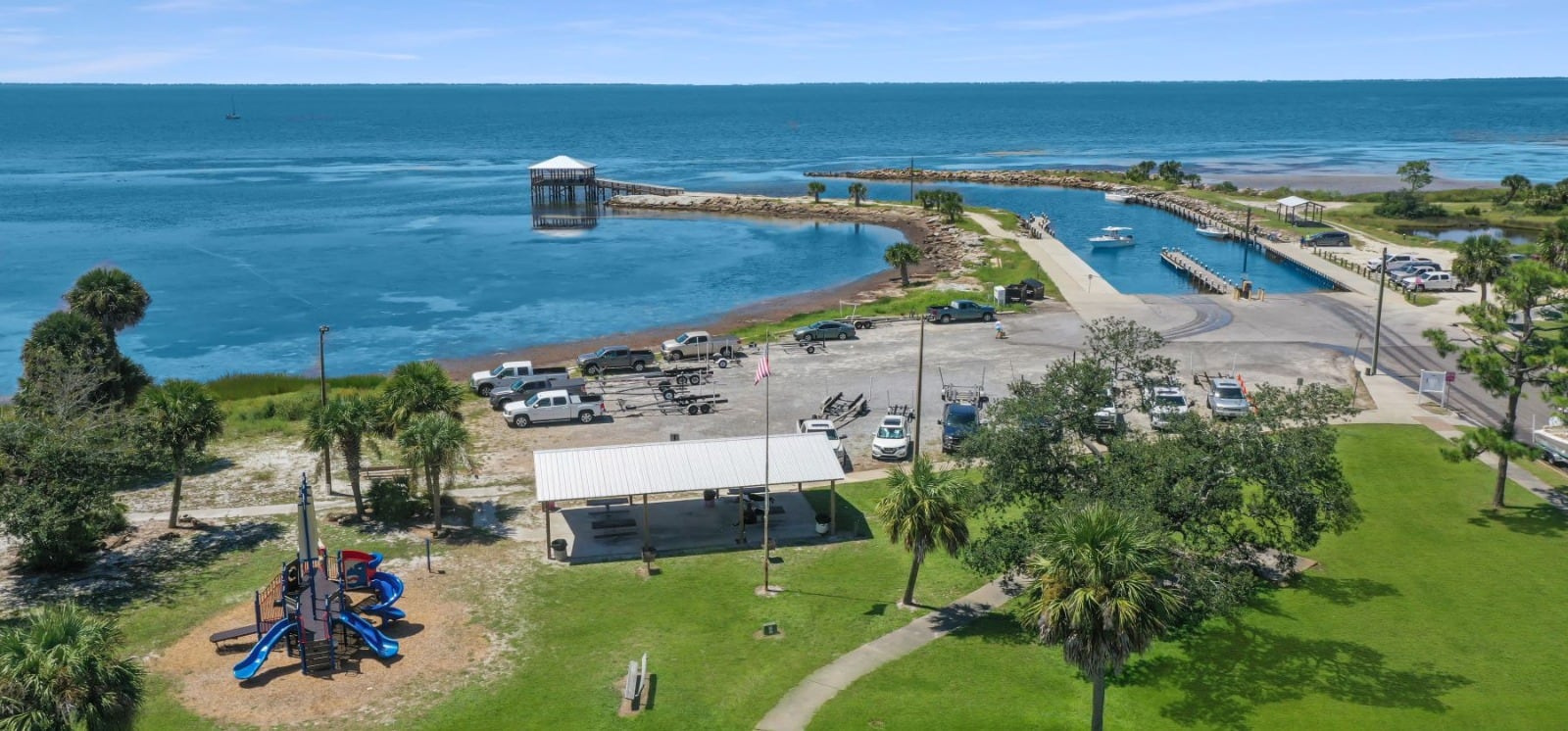
Boat RampsThere are several public boat ramps in the area, including ones at Indian Pass and the Cape: Indian Pass boat ramp - Located at the end of Indian Pass Road, this ramp allows access to the Gulf, Apalachicola Bay and St. Vincent Island. It is at Indian Pass Campground, and is open to the public, but with very limited parking St. Joseph Peninsula State Park boat ramp - Inside the state park, it provides easy access to both they bay and the Gulf, and has a boat basin, public restrooms, picnic areas and more. Port St. Joe boat ramp - Turn south at the intersection of U.S. 98 and SR 71 (Cecil G. Costin Boulevard), at the corner of The Port Inn and Frank Pate Park in Port St. Joe. The ramp is at the end of Fifth Street, past the park. This ramp allows quick access to St. Joe Bay. The park also offers public restrooms, covered picnic areas and a playground. Highland View boat ramp - Off U.S. 98 on the west side of Port St. Joe, turn north at Dolphin Street at the west side of Tapper Bridge (big bridge over the canal), then immediately right and go under the Tapper Bridge for easy access to St. Joe Bay and the Intracoastal Waterway.
Fishing Regs/Surf FishingAnyone who is not a Florida resident needs a non-resident license to surf fish. Florida's resident saltwater anglers who fish from shore or a structure affixed to shore will need to buy a $7.50 (plus administrative and handling fees) shoreline fishing license by Aug. 1, unless they have a regular resident saltwater fishing license. Caution: Be careful around surf fisherpeople. They rarely tag or mark their fishing lines so passersby can see the actual line running from the rod to the water. If you are walking along the beach, it is in your best interest to walk behind any surf fisherperson to avoid garroting yourself on the invisible fishing line. Also be very aware of surf fisherpeople who are casting while you walk behind them. Very few fisherpeople pay attention to passersby and people strolling by are frequently hooked when the surf fisherpeople cast backward in preparation for the forward arc. The money collected from saltwater fishing licenses is used to improve and restore fish habitat, and for marine fisheries research, law enforcement and public education on marine resources. Scallop Season/RegsScalloping in St. Joe Bay is very popular with locals and visitors alike. But there are strict regulations covering the fragile, and often very limited, scallop population. State waters in the Gulf of Mexico open to scallop harvest from the Pasco-Hernando County line (near Aripeka) to the west bank of the Mexico Beach Canal in Bay County. It is illegal to possess bay scallops on water outside open harvest areas. It is also illegal to land scallops outside open harvest areas. For example, it would be legal to take scallops from waters off the Hernando County coast, but illegal to dock your boat in Pasco County with the scallop catch onboard. People wading in shallow areas at low tide do not need a license, but cannot use dive masks or snorkels to help them find scallops. Bay scallops may be harvested only by hand, or with a landing or dip net. All scallopers operating from any boat must have a valid saltwater fishing license from the state. Each person is limited to two gallons of whole scallops, or one pint of meat per day. A boatload of five or more people can take no more than 10 gallons total of whole scallops, or four pints of meat total per day. If taking a boat into shallow bay waters, be particularly careful not to injure or rip our the fragile sea grass with the boat motor.
It takes literally years for sea grass to rejuvenate after such an injury, and destruction of sea grass beds is extemely detrimental to the bay's ecology. If your boat is too large to safely navigate the shallows and sea grass beds, either use poles or paddles to exit the sea grass, or use a different, more shallow-draft boat.
|